
Verified installers, not just listings
Every EPC and installer on the solar energy platform has a real profile. Service regions, project history, and trust signals you can actually read before you call.
Compare verified installers, check subsidy guides, and track your application status in one place. Chat with our assistant or connect with vendors on a solar-ready CRM.
Brands That Show Up in Real Quotations
Most solar platforms pick a side. We built for both — homeowners who need clarity before committing, and vendors who need a solar marketplace system to stop losing deals to spreadsheets.
Every EPC and installer on the solar energy platform has a real profile. Service regions, project history, and trust signals you can actually read before you call.
Subsidies, net metering, safety standards — the guides exist so you understand your options before a vendor has a chance to confuse you.
Estimate your savings, compare system sizes, and go into vendor conversations knowing what you're looking for.
Inquiry to installation, tracked in one place. Kanban boards for surveys, proposals, follow-ups, and site visits — so nothing falls through the cracks.
The platform filters intent before you call. You spend less time on dead ends and more time closing projects that are ready to move.
Service areas, past projects, certifications, and customer signals — all on your profile. Buyers trust you before the first conversation, so the close happens faster.
Your CRM workspace, ready when you are.
Service regions, team size, project types, what you're good at.
Review incoming requests, assign owners, move fast on the hot ones.
Quote, site survey, and every message. One timeline, no lost threads.
Buyer approves, token confirmed, installation slot locked.
Commission the system, hand over support details, done.
India's solar subsidy landscape changes more often than most people track. Browse schemes by state and eligibility before you finalize anything, so you're not leaving money on the table mid-process.
Union Territory Government Policy
Andaman & Nicobar Islands
Central CFA (PM Surya Ghar): up to Rs.78,000 + additional 10% island UT special category. A&N UT additional: 30% UT subsidy. Off-grid island solar (remote uninhabited-turned-inhabited islands): 95% subsidy. Eco-tourism solar: additional 20% tourism incentive under ANIDCO.
Andaman & Nicobar Islands Integrated Development Corporation (ANIDCO) / A&N Electricity Dept.
State Government Policy
Andhra Pradesh
Central CFA: up to ₹78,000 (PM Surya Ghar). AP state additional: 25–30% residential top-up (NREDCAP-administered). AP Solar Policy 2022: wheeling charges waived for 5 years; banking charges waived. Agricultural solar pumps (PM KUSUM): 60% subsidy (30+30). AP Farmer Income Protection Scheme: free electricity to farmers (4,000 units/year).
NREDCAP (New & Renewable Energy Development Corporation of AP) / Energy Dept., Govt. of AP
State Government Policy
Andhra Pradesh
Central CFA: up to Rs.78,000 (PM Surya Ghar). AP state additional: 25–30% residential top-up (NREDCAP). AP Solar Policy 2022: wheeling charges waived for 5 years. Agricultural solar pumps: 60% subsidy.
NREDCAP (New & Renewable Energy Development Corporation of AP) / Energy Dept., Govt. of AP
Client testimonials from homeowners and installers using SolarSathi.
“We compared three Gujarat EPCs on SolarSathi. Every quote included the same yield assumptions and warranty language—finally an apples-to-apples decision.”
“Our facilities team pushed five C&I vendors through the CRM pipeline. Kanban stages matched how procurement actually works.”
“As a vendor, the lead board keeps my site engineers aligned. Lost reasons are captured so marketing stops burning budget on bad fits.”
Deep reads for procurement teams and homeowners doing serious research for solar energy platforms. Structured, practical, and actually useful if you're mid-decision.

Learn everything about solar energy systems in India including pricing, benefits, subsidy and ROI.

Learn everything about solar energy systems in India including pricing, benefits, subsidy and ROI.

Learn everything about solar energy systems in India including pricing, benefits, subsidy and ROI.
Policy updates and industry movement on renewable energy marketplace, short-form and easy to scan. Different from the long-form guides. Worth checking weekly if solar procurement is part of your job.

JinkoSolar's Global Push Gains Pace as Overseas Shipments Top 80% Photograph: (AI) Chinese solar major JinkoSolar is increasingly looking beyond its home market for growth, with overseas shipments accounting for more than 80% of its total module deliveries in the first quarter of 2026 as the company sharpens its focus on international markets, energy storage and premium solar products. The push is not just a measure of Jinko's global presence, but also the conditions in its home market, where demand and pricing remain under pressure. The world's largest solar module manufacturer by cumulative shipments said international demand remained the primary driver of its business during the quarter, helping offset challenges in the domestic Chinese market where intense competition and pricing pressures continue to weigh on profitability. The company shipped 13.7 GW of solar modules during the January-March period, with the majority of volumes destined for overseas markets. JinkoSolar said growing demand from industrial, commercial, residential and utility-scale customers for integrated solar and energy storage solutions is creating new opportunities across global markets. The emphasis on international markets reflects a broader shift underway in the solar industry. While China remains the world's largest solar market, manufacturers are increasingly targeting overseas regions where pricing remains relatively stable and customers are willing to pay a premium for high-efficiency products and integrated energy solutions. "Demand from industrial, commercial, residential and utility customers for solar and storage solutions continues to grow," the company said, adding that it is further optimising its production pipeline and geographic mix to respond to evolving market dynamics. Beyond modules, JinkoSolar is placing increasing emphasis on energy storage systems (ESS), which management identified as one of its fastest-growing businesses. ESS shipments rose significantly year-on-year during the quarter to around 1.42 GWh, with a large share delivered to overseas markets. The company expects storage shipments to more than double during 2026 as it expands capacity and strengthens its global supply chain footprint. Industry analysts see the strategy as part of a wider transition among leading solar manufacturers from being pure module suppliers to providers of integrated solar-plus-storage solutions. With grids worldwide requiring greater flexibility and energy security concerns rising across regions, demand for battery-backed renewable energy systems is accelerating. JinkoSolar is also betting heavily on technological differentiation to maintain its competitive edge. The company said its Tiger Neo 3.0 series modules now achieve average power outputs of 655-660 watts, while products above 640 watts accounted for nearly a quarter of total shipments during the quarter. These premium products command higher pricing and are expected to form an increasing share o
2026-06-17 · Saur Energy
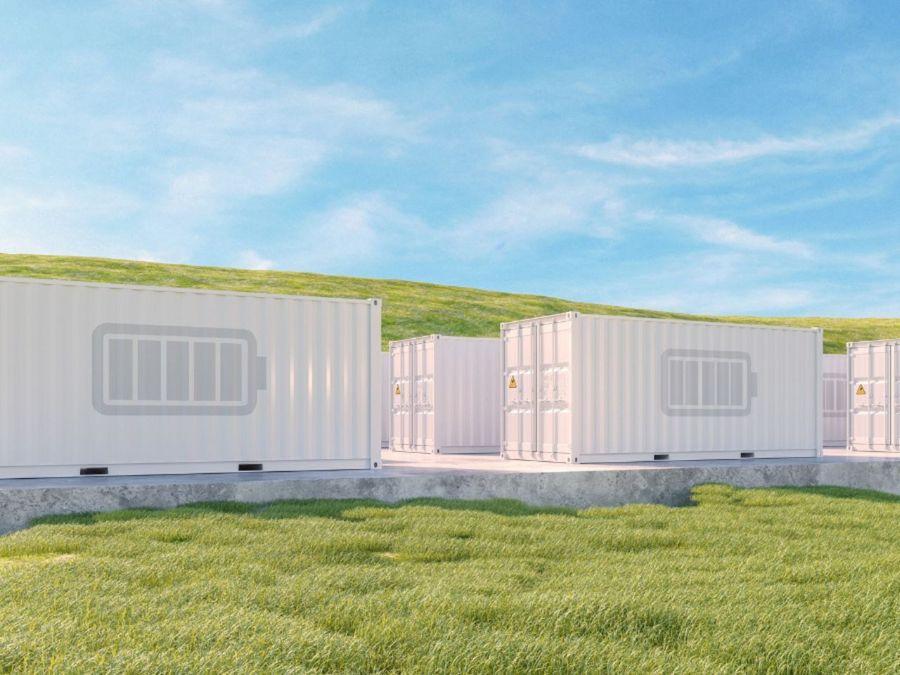
ACME Solar Holdings Limited has expanded its battery energy storage footprint in India with the commissioning of an additional battery energy storage system (BESS) capacity in Rajasthan. The company disclosed the commissioning through a regulatory filing submitted to stock exchanges on June 12, 2026. The newly commissioned project has been developed by ACME Sun Power Private Limited, a wholly owned subsidiary of ACME Solar Holdings. The latest addition comprises a 33.331 MW/120.384 MWh battery energy storage system located at Badi Sid village in Bap tehsil, spanning parts of the Phalodi and Jodhpur districts of Rajasthan. According to the company, the project will officially achieve its Commercial Operation Date (COD) on June 14, 2026. The commissioning adds another operational asset to ACME's growing portfolio of renewable energy and storage projects across the country. Following the latest commissioning, ACME Sun Power's cumulative operational battery storage capacity has reached 300 MW/1,404.32 MWh. The milestone highlights the company's increasing focus on energy storage as India accelerates the deployment of renewable energy and works toward building a more resilient and flexible power system. Large-scale battery storage facilities are becoming increasingly important for balancing electricity supply and demand, particularly as solar and wind generation continue to expand across the grid. The latest commissioning follows recent projects of the company including commissioning of Phase-IV of its Rajasthan BESS project, adding 33.33 MW/160.48 MWh capacity. ACME Solar Holdings also signed a 25-year Power Purchase Agreement (PPA) with Solar Energy Corporation of India (SECI) for a 300 MW Firm and Dispatchable Renewable Energy (FDRE) project integrated with 1,200 MWh of energy storage capacity.
2026-06-17 · Saur Energy
Stop chasing opaque quotes. The verified vendors are already here.